
Tools, Yarn & Materials · Beginner guide
How to Store Crochet Yarn and Supplies
Store yarn so it stays clean, dry, and easy to identify, with loose ends contained but not compressed.
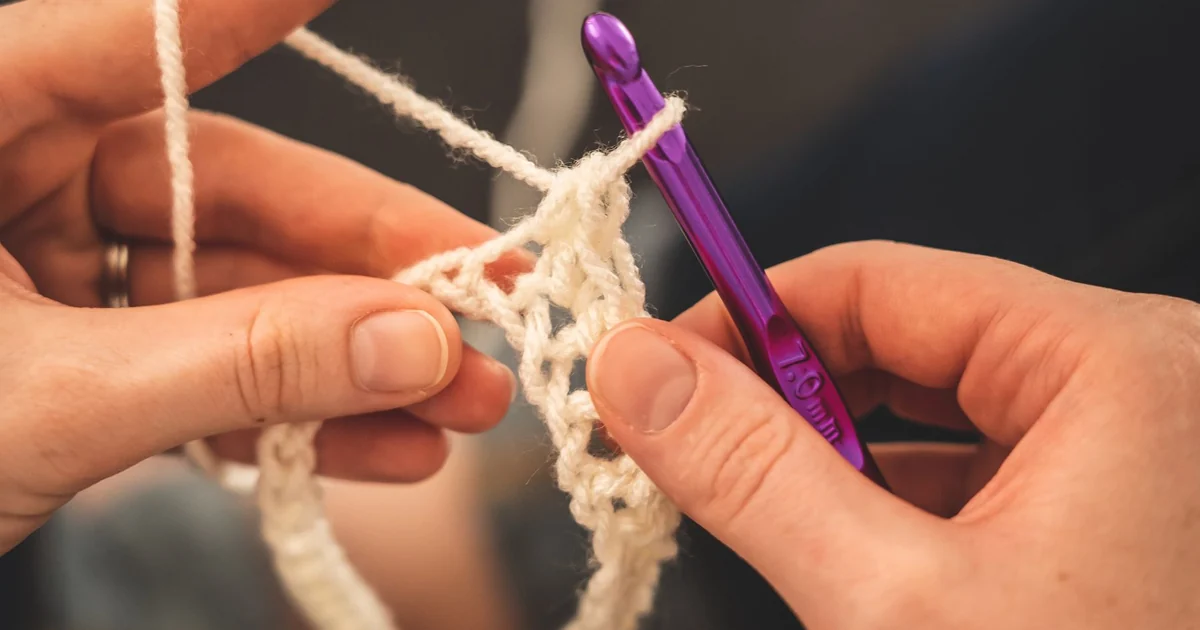
Storage is mostly about protecting yarn and remembering what each partial skein is. A simple system can prevent tangles without special organizers.
Before you begin
Keep labels or record fiber, weight, color, and dye lot before removing wrappers. Avoid dampness and direct sun.
Step-by-step instructions
- Keep each project’s yarn and notes together so the pattern and hook are easy to find.
- Contain partial skeins in a bag or bin and leave the strand end accessible without winding it tightly.
- Separate scraps by label or container if you plan to use them for practice.
- Check stored yarn before using it, especially if it has been kept for a long time.
What to check
Keep the label with the yarn
Organize by project, fiber, or weight—whichever helps you find a skein. Do not pack it so tightly that it is hard to inspect or remove.
Frequently asked questions
Should yarn be stored in plastic?
Storage needs vary by room and material. The practical goals are to keep yarn clean and dry and avoid trapping moisture.
What information should I save?
Keep the label or note fiber, weight, color, yardage, care, and dye lot when available.
Keep yarn clean and dry
For storing yarn and supplies, use this as the starting rule: keep yarn clean, dry, and protected from tangling, dust, and household damage. The pattern’s materials list connects each tool to a task; it is not a requirement to own every crochet accessory. Read the relevant instructions before beginning and keep them nearby as you work. If a general tutorial and the pattern give different directions, follow the pattern’s stated convention; another project may use a different method.
Store partial skeins with their labels
Before proceeding, confirm fiber care guidance and the storage space available. Write any project-specific choice in your notes so you can apply it consistently. If the pattern or label leaves the detail unclear, look for its own key or maker guidance rather than assuming that another project follows the same convention. This short check can prevent a small misunderstanding from affecting the rest of the work.
Protect strands from snags and tangles
A practical way to apply storing yarn and supplies: Put the pattern’s materials list beside the tools you already own, then store partial balls with their labels and project notes. Tie each item to a task the instructions require, such as marking a repeat or sewing in ends. This helps you identify a genuine need and use existing supplies where they work, rather than treating every item on a general beginner list as essential.
Group supplies by active project
A common mistake in storing yarn and supplies is compressing delicate yarn or leaving strands loose where they can snag. Watch for this sign: a yarn’s fiber or color becomes difficult to identify later. That can leave a required task unfinished or prompt a purchase the project does not need. Compare the recent work with the pattern and locate the first point where they differ. Correct that detail before continuing; stretching the fabric or adding an unplanned step can hide the cause without fixing it.
Keep fiber and dye-lot details
If a yarn’s fiber or color becomes difficult to identify later, first check fiber care guidance and the storage space available. Then compare the materials list and the task you cannot complete with the tools at hand with what you actually have. Change one thing at a time so you can tell whether it addresses the problem. If the instructions and materials match but the result still differs, use the project’s gauge, sizing, substitution, or care notes as relevant; those are more useful than a universal fix.
Choose storage that suits the yarn
Remember: organized labels help you resume a project and choose matching yarn. Matching a tool to a task keeps the setup practical and avoids adding gear that does not help with this project. If you choose an alternative, record it and compare a small sample or written step before applying the change across the project.
Make it easy to resume a project
To make storing yarn and supplies easier to repeat, use this sequence: store partial balls with their labels and project notes, inspect the result, and only then continue. At first, slow down at the point where the pattern changes direction, begins a new round, or starts a repeat. A removable marker or brief row note can hold your place while you learn the construction. Once the sequence is clear, you can work more steadily without guessing which loop or instruction comes next.
Conclusion: Storing yarn and supplies
Keep this lesson in mind: organized labels help you resume a project and choose matching yarn. Let the pattern’s actual steps determine what you need at hand. Store partial yarn with its band or a note showing fiber and color information. Keep active project supplies together so labels do not get separated.