
Crochet Basics · Beginner guide
How to Single Crochet: A Step-by-Step Beginner Guide
Learn the US single crochet by inserting the hook, pulling up a loop, and completing both loops together.
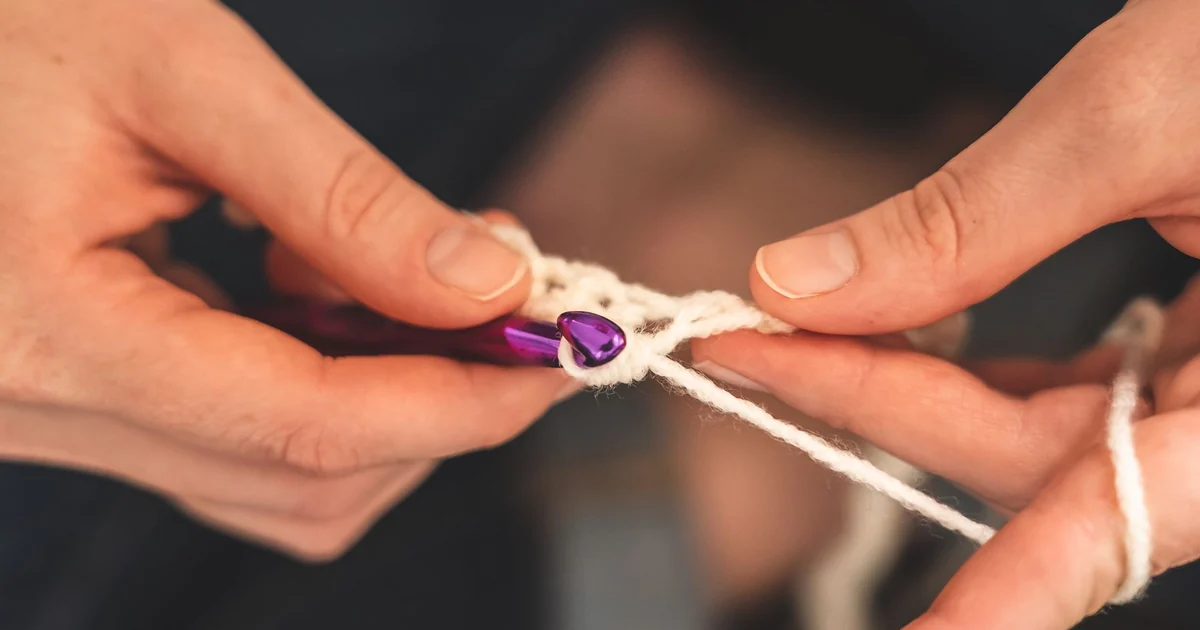
In US terminology, single crochet (sc) is a short, dense stitch. After insertion, pull up a loop, then draw yarn through both loops on the hook.
Before you begin
Use a foundation chain or small swatch and check the pattern’s turning-chain instructions. US and UK stitch names differ, so confirm the terminology first.
Step-by-step instructions
- Insert the hook into the stitch or chain specified. Keep the working yarn behind the work unless the pattern says otherwise.
- Yarn over and draw up a loop. Two loops should now be on the hook.
- Yarn over again and pull through both loops. One active loop remains.
- Repeat in the next stitch, entering each top V once rather than skipping an edge stitch.
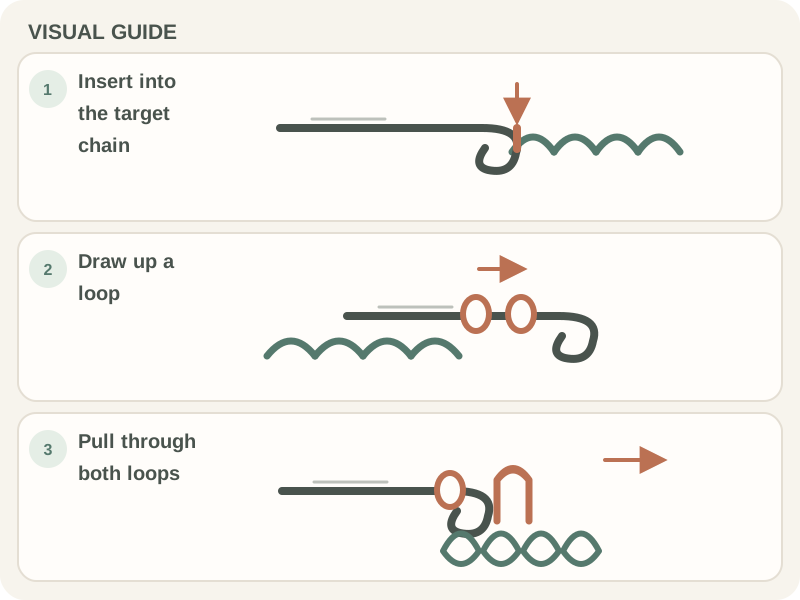
What to check
Read the stitch top
A completed US single crochet has one active loop on the hook and a compact stitch below it. Look for a line of top Vs and count them if the edges begin to shift.
Frequently asked questions
How many loops are on the hook before the final pull-through?
Two: the active loop and the loop just pulled up.
Why does my single crochet look like a chain on top?
The top V is normal; its front and back loops form the two strands of the stitch top.
Understand the path of a single crochet
In US terminology, a single crochet has a compact body and a V-shaped top. The hook enters the stitch below, catches yarn, and brings up a loop; a second yarn-over passes through the two loops on the hook. After the stitch is complete, one active loop remains. Looking for that sequence helps you distinguish a completed stitch from a chain or a loop left unfinished. The Craft Yarn Council's beginner teaching guide also emphasizes inserting into the first stitch after turning and checking each row count; use your pattern's specific edge rule.
Work into the location the pattern names
On a foundation chain, the pattern may specify the second chain from the hook or another insertion point. On later rows, look for the top V of each stitch. Unless told otherwise, many basic single-crochet instructions work under both loops of that V. Inserting under only one loop creates a different texture and should be done intentionally. If the fabric is dense, tilt it toward the light and use the hook tip to separate the strands. Avoid pushing through the stitch body, which can split the yarn or catch a neighboring loop.
Keep loop height consistent
When you pull up the first loop, bring it to roughly the height of the stitch tops rather than tightening it against the hook. A very short loop makes the next yarn-over difficult and can make the row stiff. A very tall loop may leave loose, uneven stitches. The hook shaft provides a useful reference: the loop should rest on it without being pinched into the narrow throat. Work slowly enough to see the two loops before the final pull-through. If you cannot identify them, pause and reposition the hook instead of drawing through blindly.
Use row counts to protect the edges
A simple single-crochet row often has the same number of stitches on each pass, but the turning chain and first/last stitch rules vary by pattern. The pattern may say to chain one and turn, and that chain may not count as a stitch; other constructions can specify a different rule. Place a marker in the first or final stitch if you repeatedly lose the edge. Count the top Vs across the row, not the active loop. If the total changes, inspect the edge before adding or removing stitches in the middle.
Compare single crochet with nearby stitches
US single crochet is shorter than half double crochet and double crochet. That makes a denser fabric in many yarn-and-hook combinations, though the exact feel depends on materials and tension. A project that calls for single crochet may rely on its compact texture for a firm edge or a small stitch pattern. Substituting a taller stitch can change row height, dimensions, and appearance. If you're following a pattern from outside the United States, check the terminology: UK double crochet corresponds to US single crochet. Do not translate abbreviations by the letters alone.
Troubleshoot common early mistakes
If the hook repeatedly catches only part of the yarn, rotate the head so it captures the full strand. If a stitch looks like a chain on top, inspect the completed top V; that V is normal. If the row is shorter than expected, count completed stitch tops and check for a skipped edge stitch. If the fabric becomes hard to bend, compare your loop height and hand tension across several stitches. Undoing one row is often easier than trying to force tight or missed stitches into the next row.
Takeaway: one insertion and two pull-through loops
For a standard US single crochet, insert the hook, pull up a loop, then draw yarn through both loops. Keep each stitch in the location the pattern specifies and count the top Vs at the edge. A small practice swatch lets you see whether the fabric is too tight and whether your edges stay consistent. When the sequence feels clear, use it in a project that calls for US single crochet. If the source uses UK terms, confirm the conversion before beginning.